
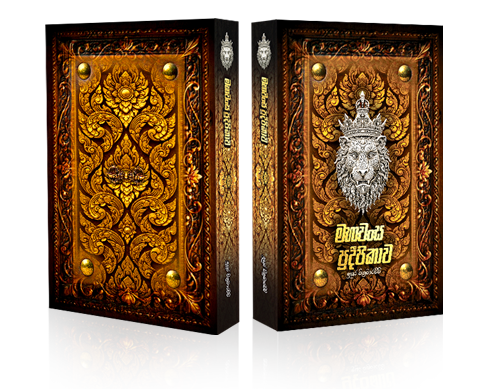
TECHNOLOGY
Collecting Genealogical Data
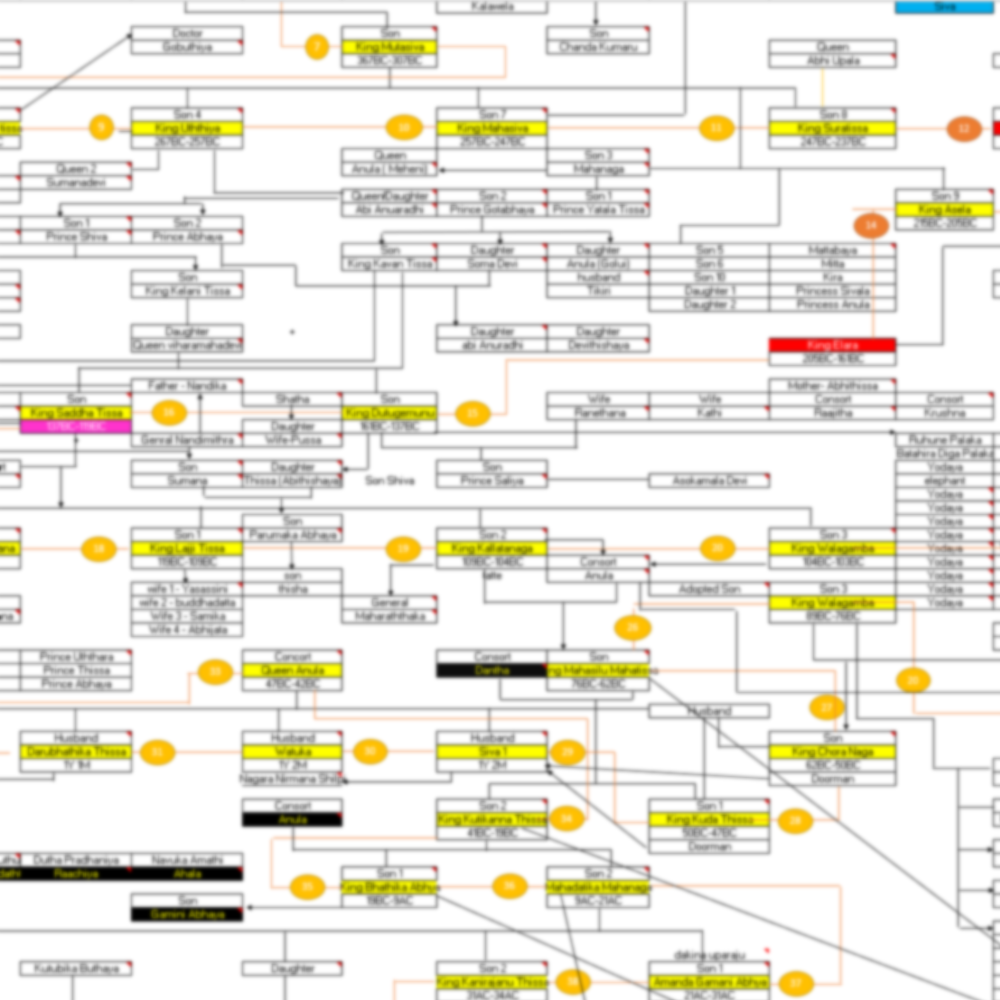
My search for answers to the question “Who was related to whom?” began with my website. I designed the website in such a way that, as historical data was entered, individual relationships were automatically interconnected. Through this process, an extensive network of relationships among Sri Lanka's monarchs gradually began to emerge. Encouraged by the success of the website, I decided to explore additional technological methods to present these relationships in a more systematic and comprehensive manner.
Using the information I had gathered, I incorporated every relationship into a methodology of my own design. Historical conclusions are established on the basis of available sources, and many scholars present historical information based on their interpretations of these sources. Therefore, I wanted to present the relationships among Sri Lanka's monarchs as clearly as possible, supported by relevant historical references.
In addition to the extensive collection of historical books I already owned, I purchased many more publications and borrowed numerous books from friends. I also collected information on relationships revealed through ancient inscriptions, folklore and a wide range of other credible sources. All this information was systematically recorded in a database, with each documented relationship accompanied by a reference identifying its original source.
Once all these names and relationships had been incorporated into the system, an extraordinarily extensive genealogical network emerged, far beyond anything I had initially imagined.
AI Image Generation – The Technology That Made My Dream a Reality
I first learned about AI image generation in 2022 through a younger friend of mine. I still vividly remember the excitement I felt when he told me about it. The moment I heard about this technology, I began exploring it. I could hardly believe my eyes, and I was overwhelmed with joy. At last, the technology I had been waiting for had arrived.
From that moment onwards, I devoted myself tirelessly to studying this technology, working day and night without rest. By 2025, AI image generation had advanced beyond anything I could have imagined.
I would like to express my deepest gratitude to all those who pioneered and contributed to the development of this remarkable technology, for they paved the way for me to transform the images that had long existed in my imagination into reality.
After an extensive period of study and experimentation, I successfully created my first image by guiding artificial intelligence to bring my vision to life.
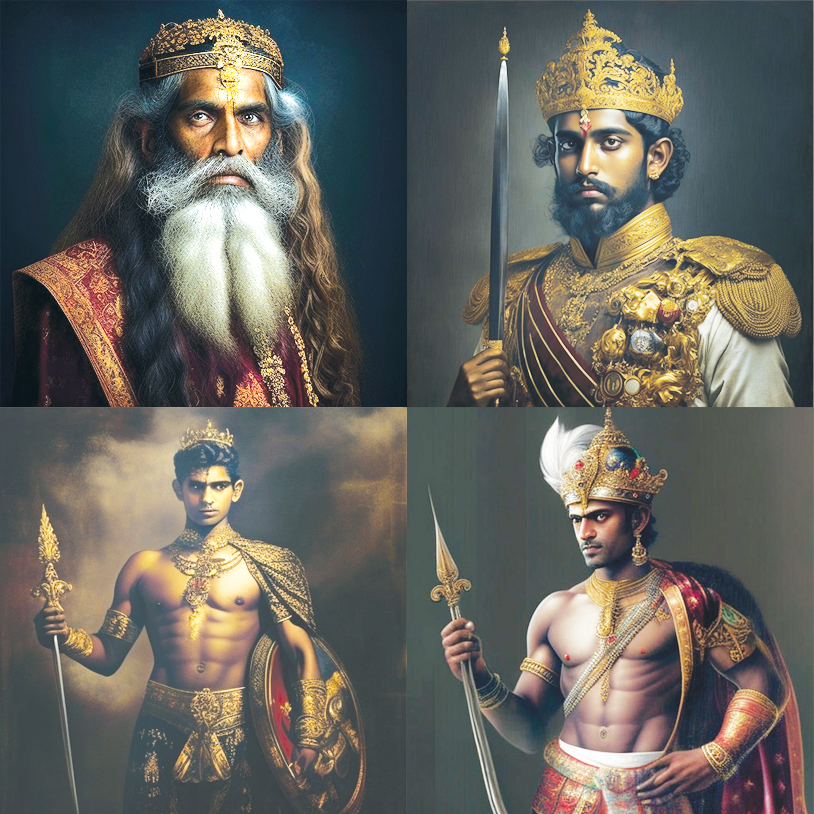
Presented here is the very first series of images I created using this technology.
Preserving Sri Lankan Cultural Identity
AI image generation technology enabled me to achieve approximately 75% of my vision of bringing the kings of my imagination to life. However, I encountered numerous challenges during the process of creating these illustrations.
The first major challenge was that many of the images generated by artificial intelligence tended to reflect Indian cultural and visual characteristics. Consequently, creating illustrations that embodied a distinct Sri Lankan cultural identity proved particularly challenging. Despite providing detailed descriptions of the monarchs I had envisioned, the resulting images lacked the authentic Sri Lankan characteristics I wished to portray.
To overcome this challenge, I created the initial visual compositions myself using Adobe Photoshop. I then used these compositions as reference images to guide artificial intelligence in generating the portraits I had envisioned.
Through this approach, I was able to achieve the distinctive Sri Lankan cultural identity I sought, bringing the kings of my imagination closer to reality while preserving the unique character of our nation's royal heritage.
Royal Attire and Jewellery
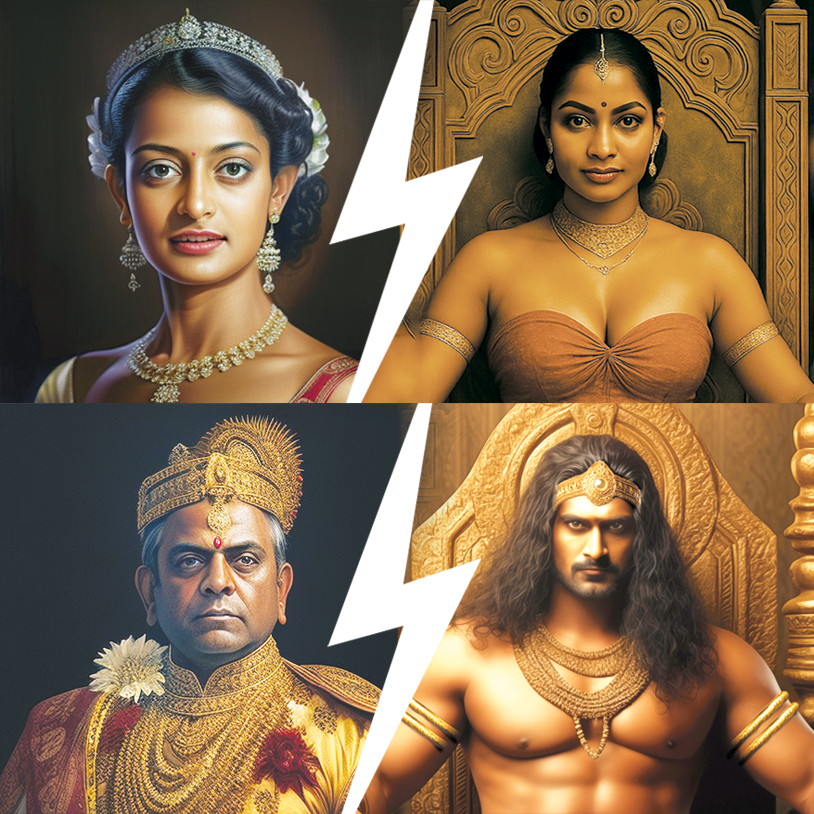
Another challenge was that the clothing and accessories generated by artificial intelligence predominantly reflected Indian cultural influences. Furthermore, with the exception of monarchs from the last few kingdoms of Sri Lanka, almost all earlier kings wore garments that left their upper bodies largely uncovered. Their upper bodies were generally partially draped with a shawl or a similar piece of cloth.
However, generating images of bare-chested individuals using AI image generation technology proved somewhat challenging due to the content policies and restrictions imposed by these platforms. Consequently, I had to explore alternative approaches to portray royal attire in a manner consistent with the historical and cultural characteristics of Sri Lanka's ancient kingdoms.
Determining the Age of Monarchs
Almost all the monarchs featured in this book were portrayed based on their estimated age at the time of their accession to the throne. One of the major challenges in creating these portraits was determining their ages, as historical sources rarely record the actual ages of Sri Lanka's monarchs. Consequently, these illustrations were created using informed estimates derived from extensive historical research.
In determining the approximate age of each monarch, several factors were carefully considered, including the identity of the preceding monarch, the duration of their reign and whether the successor was a child, sibling or an individual outside the immediate royal family. The duration of each monarch's own reign was also taken into consideration. By analysing these and numerous other historical factors, I arrived at reasonable estimates of their ages.
King Bhatika Tissa and King Kanittha Tissa are recorded in historical sources as twin brothers. However, since Prince Bhatika Tissa ascended the throne at a young age, his portrait depicts him as a young monarch. King Kanittha Tissa, who succeeded him, is portrayed with a somewhat older appearance to reflect the passage of time.
Similarly, Queen Lilavati ascended the throne on three separate occasions. Three distinct portraits have therefore been created to represent her during each of these reigns, with her physical appearance adjusted to reflect her estimated age at the time of each accession.

Determining the Physical Appearance of Monarchs
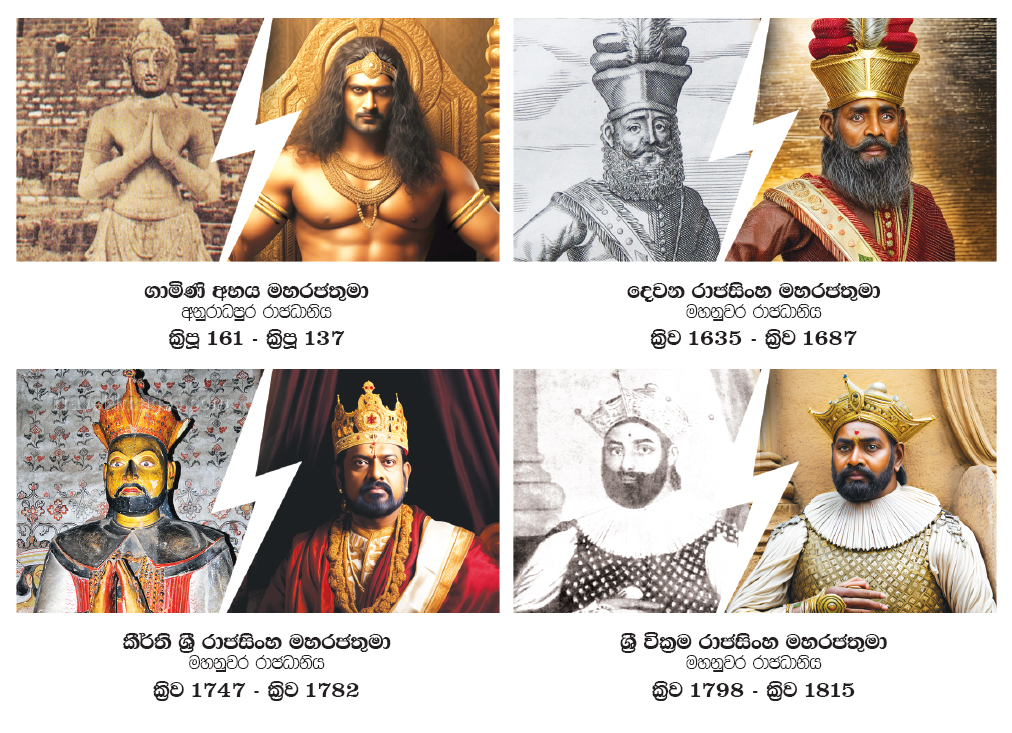
n determining the physical appearance of Sri Lanka's monarchs, I focused on several fundamental aspects. The first and most important was the study of existing historical paintings, portraits and sculptures depicting these monarchs. To date, identifiable visual representations of only a limited number of Sri Lankan monarchs have been discovered.
- (015) King Gamani Abhaya – The statue located within the sacred precincts of the Maha Seya.
- (035) King Bhatikabhaya – The statue located within the sacred precincts of the Maha Seya.
- (144) King Nissanka Malla – The statue at the Dambulla Cave Temple and the painting located near Sri Pada (Adam's Peak).
- (186) King Vimaladharmasuriya I
- (188) King Rajasinghe II – The portrait of the king featured in the 1693 edition of Robert Knox's An Historical Relation of the Island Ceylon.
- (191) King Kirti Sri Rajasinghe – The statue of the king within the Dambulla Cave Temple.
- (193) King Rajadhi Rajasinghe – The drawing by Jan Brandes, dated 1785.
- (194) King Sri Vikrama Rajasinghe
Using the distinctive characteristics of these historical portraits and sculptures as visual references, I endeavoured to create historically informed representations through artificial intelligence.
Clues Embedded in Royal Names
The second aspect I considered was the study of clues found in historical sources that indicate the physical characteristics of individual monarchs. These clues enabled me to make informed assumptions about the appearance of a considerable number of kings. Several examples are given below.
- (017) King Thulaththana – Large breasts or a broad chest.
- (019) King Khallatanaga – A bald head.
- (026) King Mahaculika Mahatissa – The term Mahaculika refers to a large topknot or a prominent arrangement of hair tied on the crown of the head.
- (036) King Mahadathika Mahanaga – A thick moustache.
- (042) King Chandamukhasiva – A moon-shaped face.
- (046) King Vankanāsika Tissa – A curved nose.
- (047) King Gajabahu – Large, muscular arms.
Incorporating Royal Achievements and Distinctive Characteristics
The next aspect I considered was the incorporation of notable achievements, distinctive abilities and significant historical contributions associated with individual monarchs into their illustrations. Several examples are given below.
- (008) King Devanampiya Tissa – Incorporating Mihintale into the background.
- (020) King Valagamba – Featuring Abhayagiriya in the background.
- (037) King Amandagamani Abhaya – Including the image of a cow alongside the king to commemorate the proclamation prohibiting the slaughter of animals.
- (062) King Mahasena – Incorporating the Jetavanaramaya Stupa into the background.
- (063) King Sirimeghavanna – Including a representation of the Sacred Tooth Relic to commemorate its arrival in Sri Lanka during his reign.
- (064) King Jetthatissa II – Incorporating an ivory carving to reflect his reputation as a skilled ivory carver.
Incorporating Significant Historical Events and Literary Works
Another aspect was the inclusion of references to significant historical events and literary works associated with individual monarchs. Several examples are given below.
- (168) King Bhuvanekabahu V – Elu Attanagalu Vamsaya (Gampola period).
- (175) King Bhuvanekabahu VI – Sinhala Sangaya.
- (176) King Parakramabahu VII – Elu Attanagalu Vamsaya (Kotte period).
- (179) King Vijayabahu VI – Vijayaba Kollaya (the Sack of Vijayabahu).
- (183) King Rajasinghe I – The Battle of Mulleriyawa.
- (186) King Vimaladharmasuriya I – The Battle of Danture.
- (188) King Rajasinghe II – The Battle of Randeniwela.
Other Factors Taken into Consideration
Incorporating portraits of military commanders who played a significant role in bringing monarchs to power alongside the respective monarchs.
- (101) King Datta
- (102) King Hatthadatha
- (127) King Sena V
- (129) King Vikramabahu I
- (148) Queen Lilavati
- (150) Queen Kalyanavati
- (151) King Dharmasoka
- (152) King Anikanga
- (184) King Rajasuriya
Incorporating portraits of queens, ministers and parents alongside the respective monarchs.
- (108) King Aggabodhi VII
- (109) King Mahinda II
- (115) King Sena I
- (116) King Sena II
- (119) King Kassapa V
- (139) King Vikramabahu II
- (166) King Parakramabahu V
- (174) King Jayabahu II
- (185) King Nikapitiye Bandara
- (190) King Sri Vira Parakrama Narendrasinha
In addition to the factors mentioned above, I incorporated various other distinctive historical characteristics into the creation of these portraits. I take humble satisfaction in the efforts I have made to bring the “Kings of My Imagination” to life in this manner.
I devoted considerable effort to reflecting the personality, warrior spirit and regal majesty of each monarch through their facial expressions, drawing inspiration from their historical deeds and achievements. Similarly, I adopted various approaches to portray monarchs whose reigns were characterised by weakness. I believe that anyone who carefully observes these portraits will be able to recognise such subtle differences.
To transform the “Kings of My Imagination” into reality, I generated more than 27,000 images. In certain instances, more than 500 images were created for a single monarch before achieving a representation that closely resembled the image I had envisioned. Considerable effort was also devoted to refining not only their physical appearance but also their clothing, jewellery and royal ornaments.
Furthermore, after completing the initial portraits, certain ornaments had to be incorporated manually using other software applications. One such example is the Ekāvæla or Ekāvaliya, associated with the royal lineage of King Manavamma. This refers to a single-strand necklace or chain, which may or may not be strung with pearls or similar ornaments.
Similarly, bracelets, armlets and even the crowns of certain monarchs had to be added during the subsequent stages of image refinement. This was necessary because the crowns typically recognised and generated by artificial intelligence differed considerably from those worn by the monarchs of Sri Lanka's early kingdoms.
I consider it a personal achievement that, through such extensive research, dedication and painstaking effort, the “Kings of My Imagination” were ultimately transformed from mere products of imagination into historically informed representations of monarchs, consistent with the available historical sources.
Following the completion of these royal portraits, the illustrations were incorporated into the genealogical charts of the respective monarchs. My intention was to enable children to identify and understand Sri Lanka's royal lineages more clearly and effortlessly.
It is also my sincere hope that, through repeated exposure to these illustrations, the faces of our monarchs will become firmly embedded in the minds of our children, allowing them to recall the historical deeds and achievements associated with each monarch simply by looking at their portraits.